

Back in 2008, when Bitcoin was first introduced, hardly anyone paid attention. Crypto felt like a niche experiment. But things started changing around 2014, when crypto exchanges began appearing and people realized digital assets could be traded just like stocks.
Fast forward to 2025 crypto exchanges are everywhere. Millions of traders are actively buying and selling digital assets, and many businesses are running their own trading platforms. As trading matured, people began looking for ways to trade bigger with less capital. That’s when leverage and margin trading entered the spotlight.
These tools can amplify profits but they also increase risks. In this guide, we’ll break down how leverage and margin trading work, their benefits, risks, and how businesses can build their own margin trading platforms.
What Is Crypto Leverage and Margin Trading?
Imagine you want to trade $1,000 worth of Bitcoin, but you only have $100. With margin trading, you can borrow the remaining $900 from the exchange. This borrowed money is called leverage.
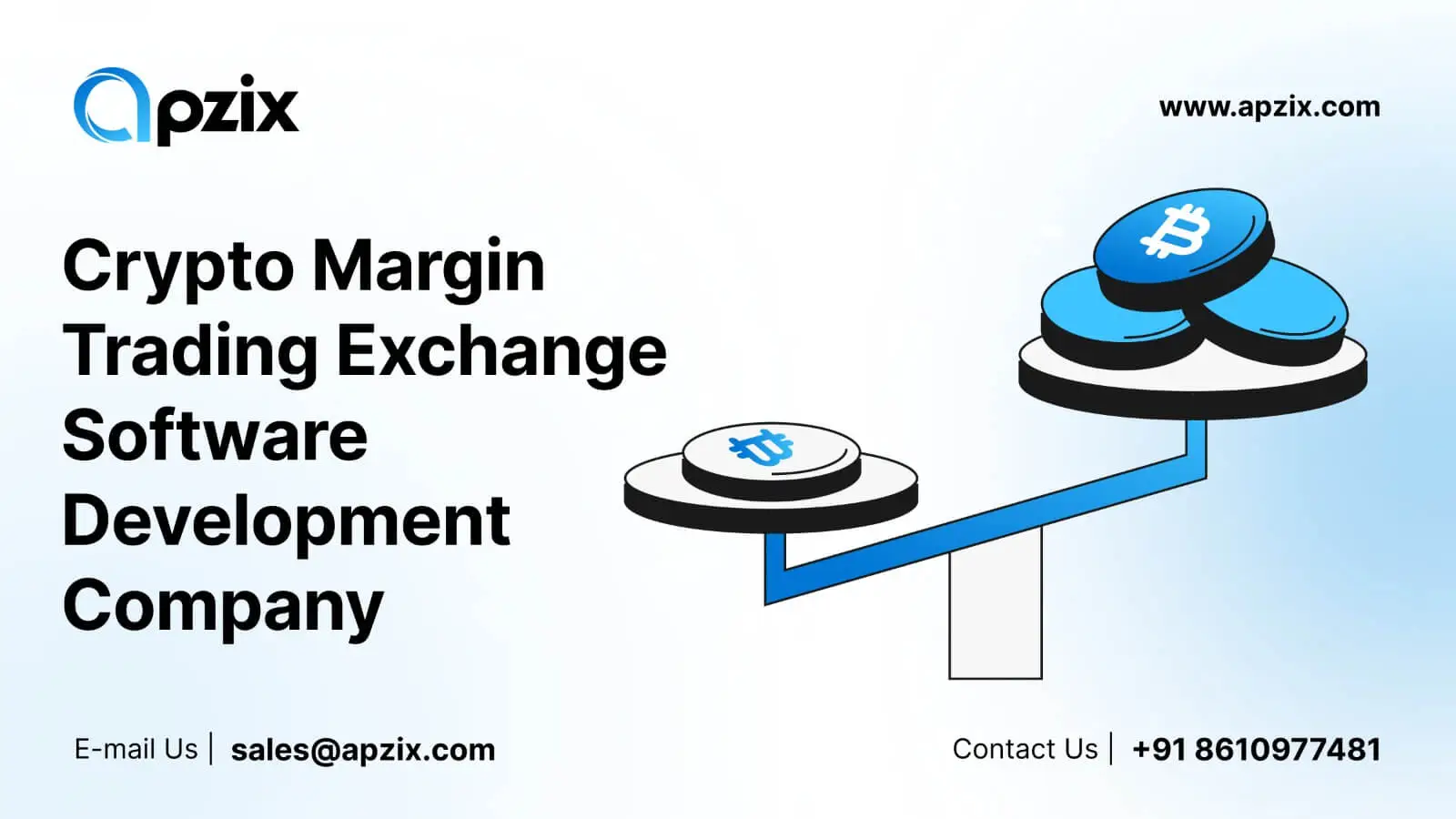
Leverage allows traders to open bigger positions with a small initial investment. If the market moves in your favor, profits increase. But if the market moves against you, losses also increase.
That’s why margin trading is powerful but it must be used carefully with proper risk management.
Crypto Margin Trading Exchange Development Company
At ApziX, we build crypto margin trading platforms that allow users to trade with leverage safely and efficiently.
Our platforms include:
Adjustable leverage settings
Stop-loss and take-profit tools
Secure borrowing and lending systems
Multi-crypto trading support
Advanced risk management features
We focus on security, performance, and simple interfaces, helping traders manage their positions easily and helping businesses launch profitable trading platforms.
Key Features of Crypto Leverage & Margin Trading Platforms
Leverage Management
Traders can choose leverage levels like 2x, 5x, or 10x. The system automatically calculates margin requirements and sets limits to control risk.
Margin Wallet System
A dedicated wallet stores margin funds separately from the main wallet. It tracks borrowed funds, available margin, and liquidation risk in real time.
Advanced Risk Control Tools
Includes stop-loss, take-profit, margin alerts, and automatic liquidation. These tools help traders avoid large losses when the market moves suddenly.
High-Performance Trading Engine
The core engine matches buy and sell orders instantly, even during high traffic. This ensures real-time trading without delays.
Secure Borrowing System
Traders can borrow funds safely with interest tracking, repayment schedules, and collateral checks. This protects both users and the platform.
User & Admin Dashboards
Traders get a clear dashboard to manage trades and funds. Admins get full control over users, risk settings, reports, and platform configuration.
Benefits of Crypto Leverage & Margin Trading Development
Higher Profit Potential
Even with small capital, traders can open large trades and increase potential returns.
Attracts Advanced Traders
Professional traders prefer exchanges with leverage and margin tools. This helps exchange platforms grow their user base.
Higher Trading Volume
Leverage encourages bigger and more frequent trades, increasing exchange platform revenue through fees.
Better User Experience
Real-time charts, risk tools, and intuitive dashboards make trading easier and more engaging.
Multiple Revenue Streams
Exchange owners earn from trading fees, margin interest, liquidation fees, and lending charges.
More Flexibility for Traders
Users can trade larger positions, hedge risks, and explore different strategies without huge capital.
Risk Management Features in Margin Trading Software
Auto Deleveraging (ADL)
Automatically reduces positions during extreme market volatility to protect the platform and traders.
Stop Loss & Take Profit
Automatically closes trades at predefined prices to limit losses or lock profits.
Partial Close Orders
Traders can close part of a trade while keeping the rest open, helping them manage risk and secure profits.
Insurance Fund
A safety fund that covers losses when liquidation cannot fully close a position, protecting the platform ecosystem.
What Is Leverage Trading?
Leverage trading means increasing your trading power by borrowing funds. You deposit a small amount as collateral (margin), and the exchange provides the rest.
Traders use leverage to amplify potential gains—but losses are also amplified. That’s why leverage trading requires careful planning and risk management.
Normal Trading vs Leverage Trading (Simple Example)
Normal Trading (Spot Trading)
You buy crypto using only your own money.
Example:
You buy $500 worth of Bitcoin
You must have $500 in your account
Profit & Loss:
Profit and loss are based only on your actual investment
Leverage Trading
You borrow funds to open a bigger position.
Example:
With 10x leverage, $100 lets you trade $1,000
The exchange lends you $900
Profit & Loss:
A 5% price increase = $50 profit
A 5% price drop can liquidate your position
How Does Margin Trading Work in a Crypto Exchange?
Let’s say you want to open a $10,000 trade.
You have: $1,000
You choose: 10x leverage
This means:
You deposit $1,000 as margin
The exchange lends you $9,000
Total trade size becomes $10,000
If the market moves in your favor, profits are multiplied. If it moves against you, the exchange may liquidate your position to recover the loan.
Why Choose ApziX for Leverage & Margin Trading Exchange Development?
ApziX is a leading crypto exchange development company specializing in leverage and margin trading platforms. We build custom solutions tailored to your business goals, whether you’re launching a startup exchange or upgrading an existing exchange platform.
Our team designs secure, scalable, and feature-rich platforms that help you attract traders, increase trading volume, and grow revenue. From planning to deployment, we handle the entire exchange development process to help you launch with confidence.