

Real-world assets are steadily moving into blockchain systems, not as experiments, but as practical digital representations of value. Businesses today are exploring ways to bring physical and financial assets onto distributed ledgers to improve transparency, simplify ownership management, and reach broader markets. This shift has made asset tokenization a serious consideration for enterprises, financial institutions, and emerging platforms.
Among the available blockchain options, the XRP Ledger (XRPL) stands out for projects that require speed, cost efficiency, and operational stability. Designed for financial use cases, XRPL provides a strong foundation for issuing and managing asset-backed tokens without unnecessary complexity.
This article explains how real-world asset tokens can be launched on the XRP Ledger, what makes XRPL suitable for this purpose, and how ApziX supports businesses throughout the process.
What Real-World Asset Tokenization Actually Means?
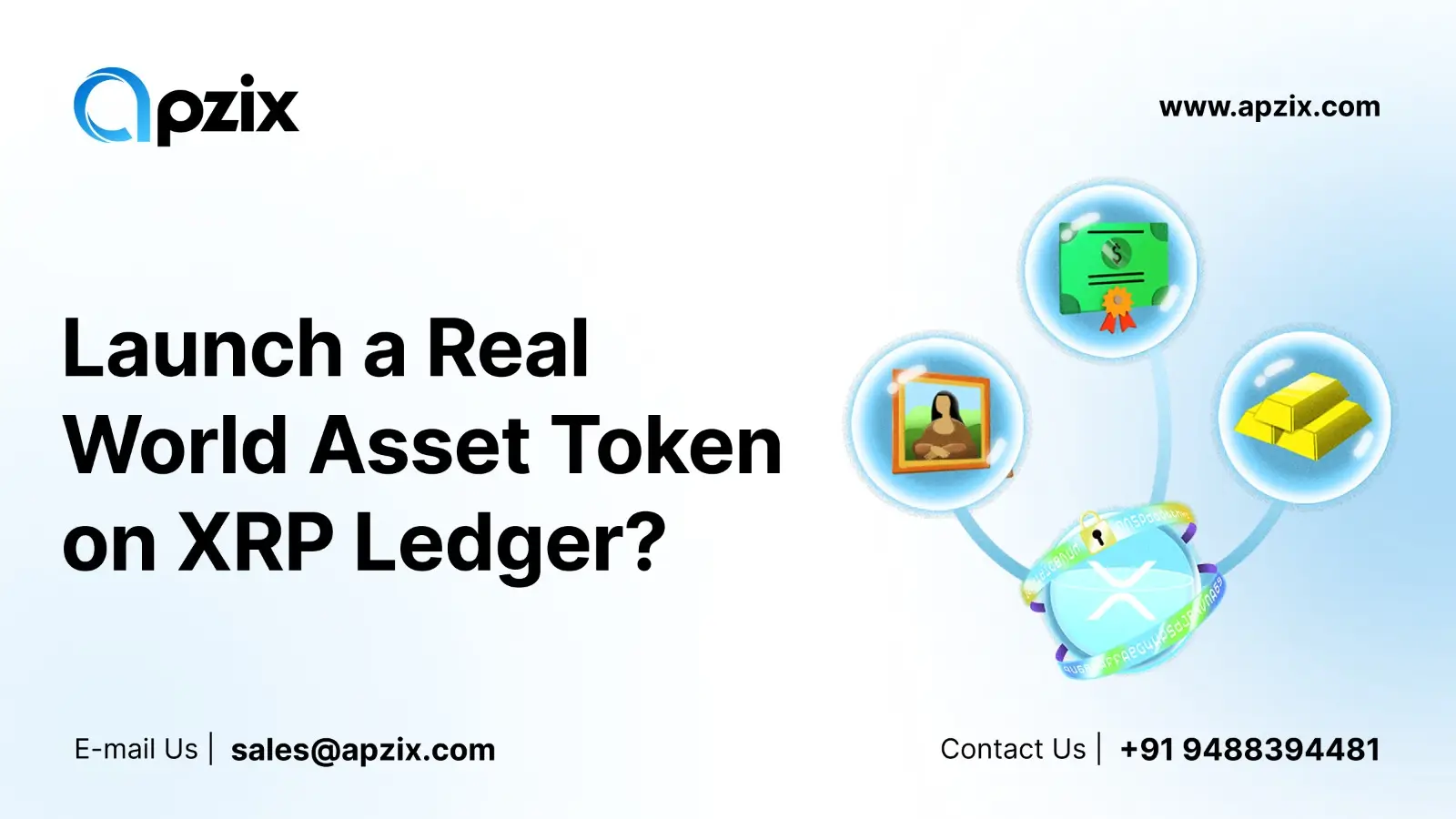
Tokenization, in simple terms, is the digital representation of an asset on a blockchain. A token does not replace the asset itself. Instead, it represents ownership, value, or usage rights tied to something that exists outside the blockchain.
These assets can be physical, financial, or contractual in nature, such as:
Real estate and land holdings
Commodities like precious metals or energy resources
Bonds, invoices, and treasury instruments
Private equity stakes and investment funds
Royalties, licenses, and intellectual property
Through real world asset tokenization development, organizations gain the ability to divide assets into smaller units, improve record transparency, and manage transfers with greater efficiency while remaining aligned with legal and regulatory requirements.
Why the XRP Ledger Fits Real-World Assets?
Not every blockchain is built with real-world assets in mind. Many platforms focus on experimentation or consumer applications, which may not meet enterprise expectations.
The XRP Ledger was created with financial infrastructure as a priority. Its architecture supports consistent performance even under high transaction volumes, making it suitable for asset-backed token use cases.
Key reasons businesses choose XRPL include:
Fast transaction settlement, typically completed within seconds
Low transaction costs, even during high network activity
Built-in token issuance, without the need for complex smart contracts
Energy-efficient consensus, avoiding mining-based systems
Long operational history, supporting reliability and trust
These characteristics help ensure that asset-linked tokens can be issued and managed with predictability, which is essential when dealing with real economic value.
How Real-World Asset Tokens Are Created on XRPL?
Launching a real-world asset token is not a single technical step. It is a structured process that connects blockchain mechanics with real-world ownership and governance.
Asset Definition and Structure
The process begins with clearly defining the asset. This includes identifying what the token represents, how ownership is recorded, and how the asset is legally held or managed. Custody, valuation, and jurisdictional compliance are addressed at this stage.
Token Design
Next comes token design. Decisions are made about supply, divisibility, transfer permissions, and redemption logic. Some tokens represent fractional ownership, while others provide rights to income, access, or settlement value.
Issuance on the XRP Ledger
On XRPL, asset tokens are issued as Issued Currencies. Trust lines play an important role, allowing issuers to control which accounts can hold or transact the token. This supports governance and compliance requirements from the start.
Controls and Safeguards
The XRP Ledger supports features such as escrow conditions, multi-signature authorization, and account-level restrictions. These tools help manage risk, enforce rules, and protect asset integrity throughout the token’s lifecycle.
Integration and Access
Finally, the token is integrated with XRPL-compatible wallets, dashboards, and internal systems. This ensures asset holders can view balances, track activity, and interact with the token smoothly.
Practical Use Cases Across Industries
Real-world asset tokenization on the XRP Ledger applies to a wide range of industries, each with different operational needs.
Real estate platforms can offer fractional ownership and simplified settlement
Commodity issuers can represent asset-backed value with transparent supply tracking
Financial institutions can digitize bonds, notes, and structured products
Trade finance providers can tokenize invoices and receivables
Private market platforms can improve access to traditionally illiquid assets
In each case, XRPL’s efficiency and control features support scalable and compliant implementation.
Compliance, Security, and Operational Trust
Tokenizing real-world assets requires more than technical execution. Legal clarity, security practices, and transparency all play a critical role in long-term success.
Important considerations include:
Verifiable asset backing and audit processes
KYC and AML controls where applicable
Jurisdiction-specific regulatory alignment
Secure key management and custody models
Clear documentation and reporting structures
Projects that address these elements early are better positioned to gain trust from users, partners, and regulators.
How ApziX Helps Launch XRPL Asset Tokens?
ApziX works with businesses that want to bring real-world assets onto the XRP Ledger in a structured and reliable way. The focus is on building solutions that align blockchain capabilities with real-world operational needs.
ApziX services include:
XRPL token architecture and issuance planning
Asset-backed token modeling and configuration
Wallet, dashboard, and system integrations
Security-focused development workflows
Ongoing technical guidance and optimization
As an experienced cryptocurrency token development company, ApziX supports projects from early planning through deployment, ensuring that asset tokenization solutions are practical, scalable, and aligned with business objectives.
Conclusion
Tokenized real-world assets are becoming an important part of modern digital finance. As infrastructure matures, businesses that adopt asset tokenization thoughtfully can improve operational efficiency, transparency, and market access.
The XRP Ledger provides a stable and efficient environment for these initiatives. When paired with a clear asset strategy and a capable development partner, launching a real-world asset token becomes a manageable and forward-looking step rather than a technical challenge.
ApziX continues to support organizations exploring this space, helping them translate real-world value into functional blockchain-based systems built for long-term use.